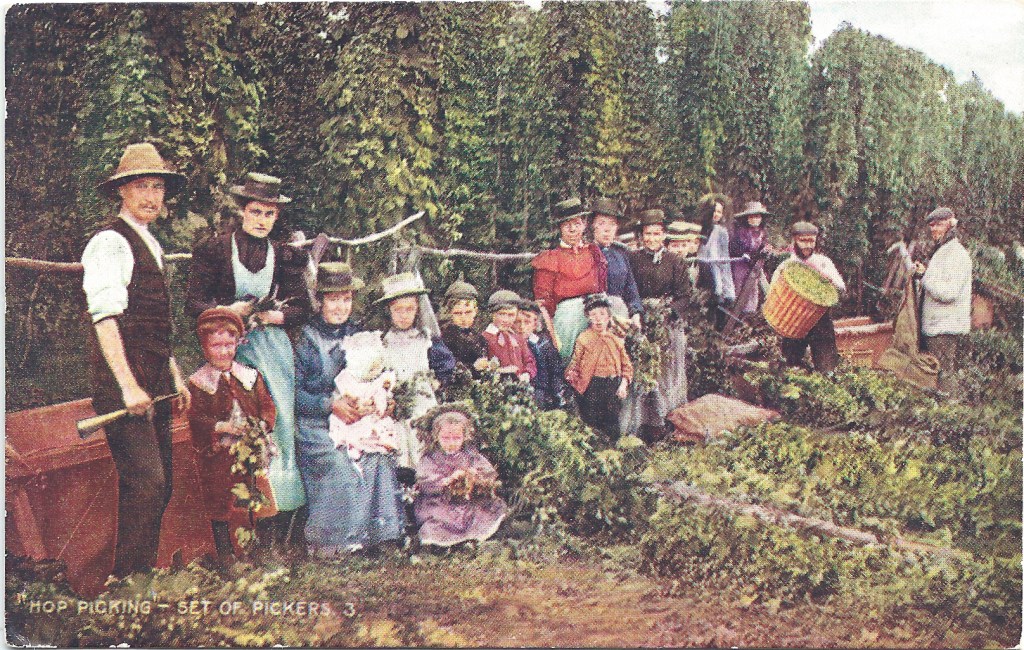
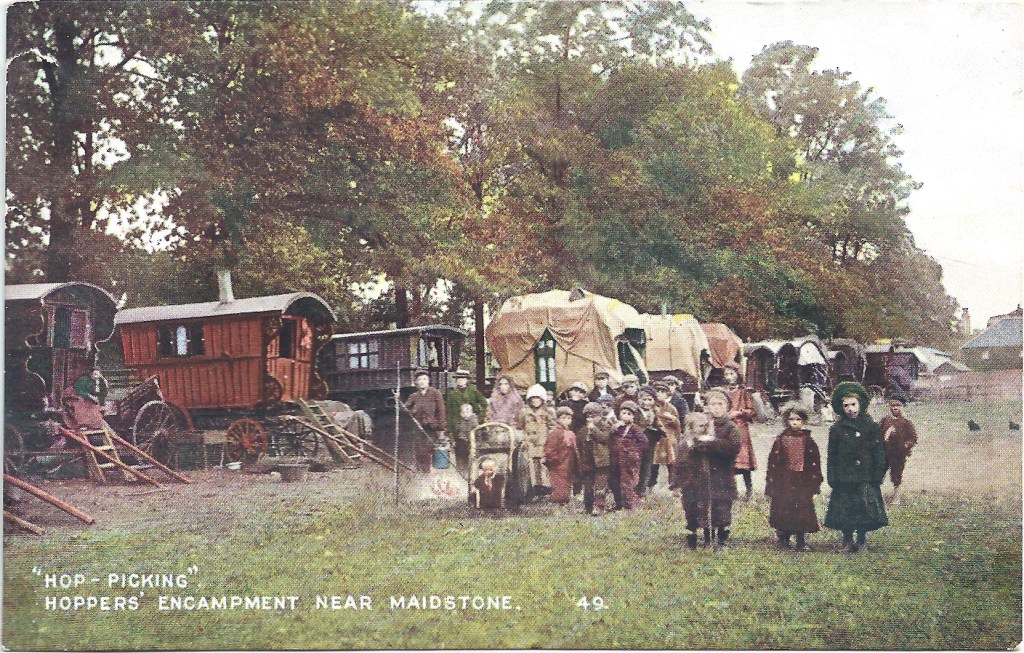
My great grandad Charles William JARVIS (1861-1940) never seemed to hold down a job for very long. I’ve inherited twenty-two postcards showing scenes of hop picking in Faversham. The cards have been heavily glued into some sort of scrapbook and then taken out.
One of the cards has in feint pencil on the back, ‘Bought in Faversham, 5th September 1908’. H Jarvis. Hephzibah was Charles’ eldest daughter.
Charles lived right in the middle of the Kent hop-growing area for almost all the first half of his life and then moved his family to Sheffield in the late 1890s. I strongly suspect Charles carried on returning to Kent for hop-picking work, probably taking some or all of the family with him, but I can’t imagine ‘the Aunts’ or my grandad taking part, but it is also possible that they stayed with other family members who had remained in Kent. The postcards and contemporary reports help paint a vivid picture. In 1907 The Lancet records:
As regards the most important class of pickers, the “foreigners” or casual hands from the large towns … a general tendency to improvement in their conditions of lodging, especially in certain hop-gardens … [however, there are instances of] … insufficient or filthy accommodation for sleeping, absence of water or facilities for cooking, and other objectionable conditions for which neither the short period of employment nor the class of people employed should be accepted as an excuse … married couples, single men, and girls are often herded together indiscriminately under the same roof or in the same tent … there would often be great advantage in the provision of camp latrines.
In 1910 the Lancet records:
The hop-pickers comprise the regular “hoppers” who reside in the vicinity of the hop-fields, gypsies who live in tents and vans, and habitual vagrants. Accommodation has to be found for the foreign “hoppers” who are often accompanied by their children … in the rural district of Faversham there were last year [1909] 8,800 “foreigners”.
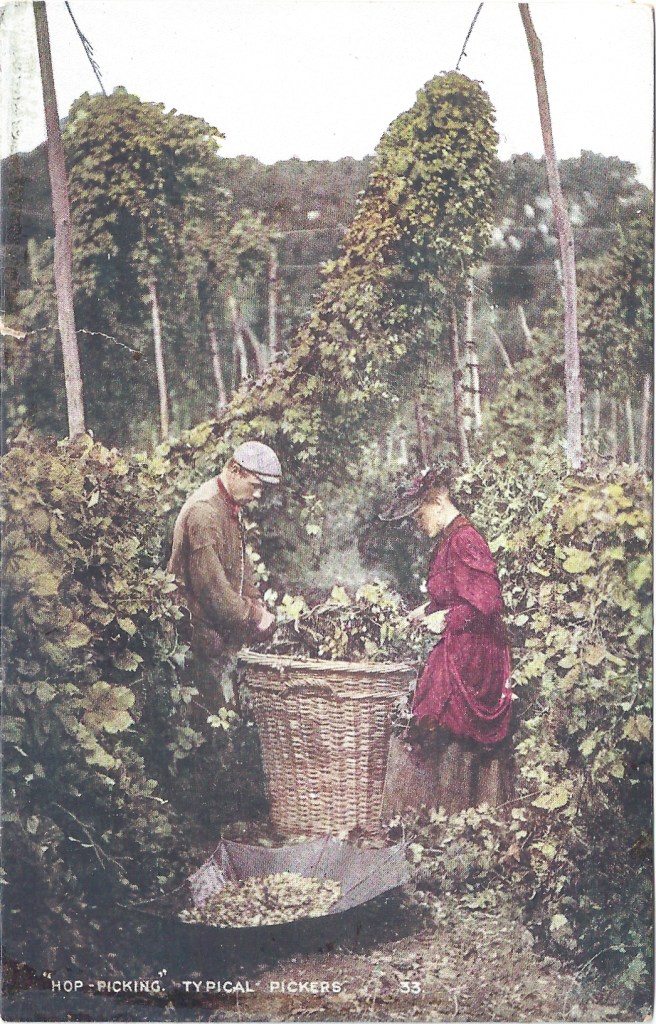
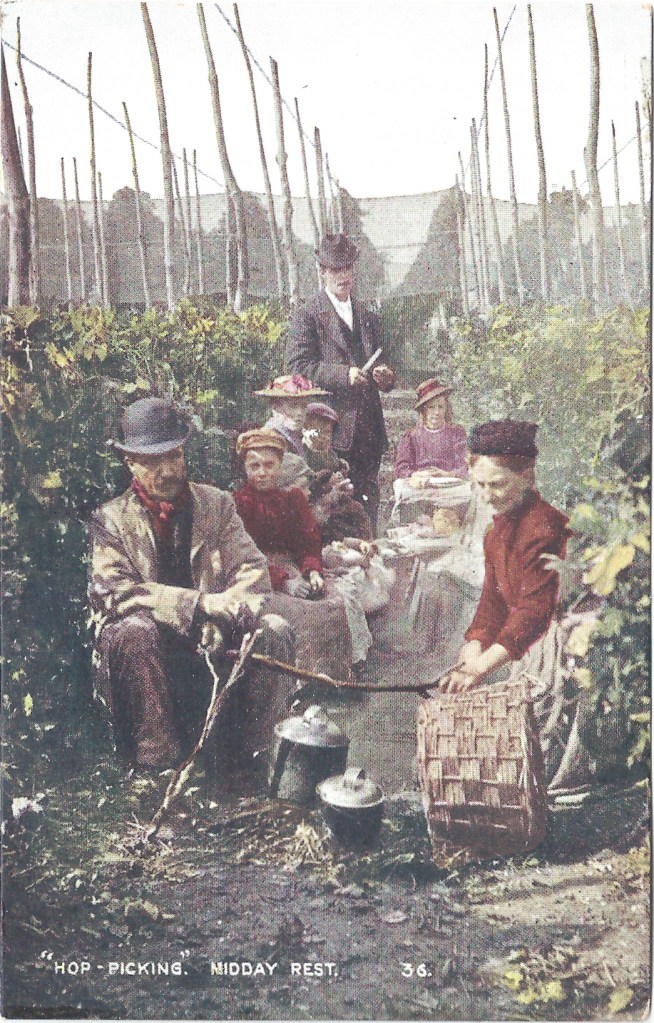
I understand the hop belongs to the same family as the hemp and nettle. They give beer its aromatic flavour. They’re a native species in Europe but perhaps not England, I think there is an old ditty: Hops, Reformation, pickerel, and beer / Came into England all in one year. They used to be a very uncertain crop, subject to mould and flies, so presumably the pickers wouldn’t have been able to rely on the income.
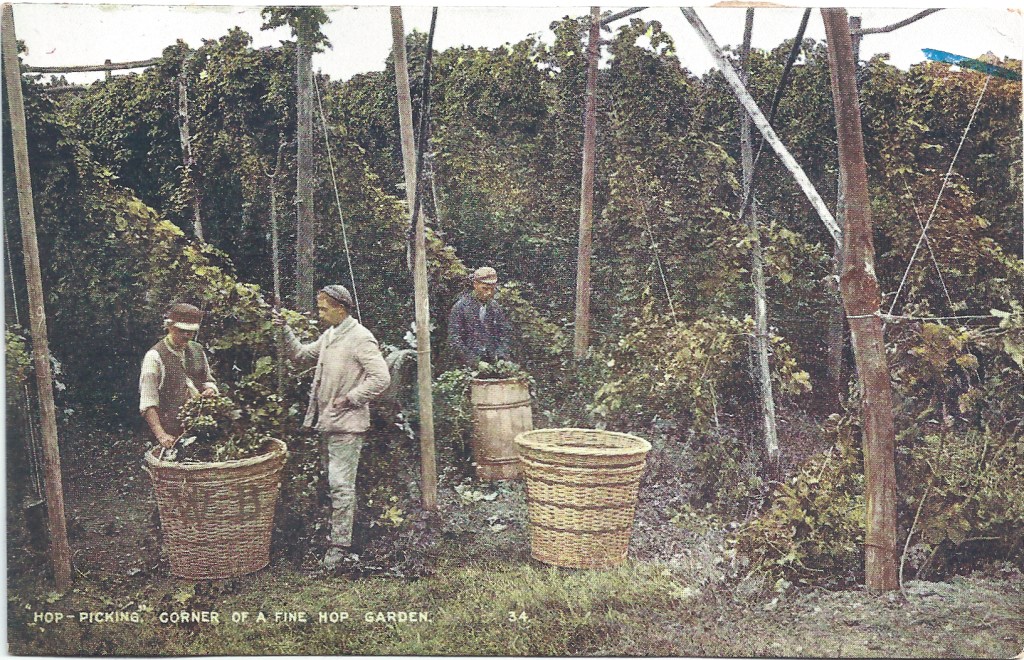
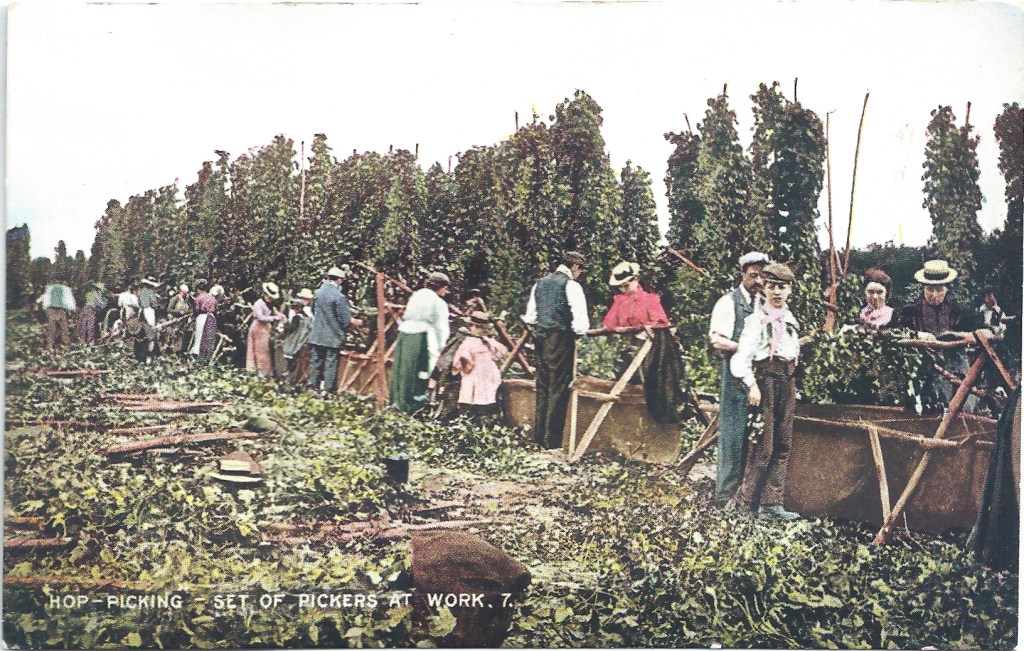
There’s a short film of hop-pickers working in 1929 held by the British Film Institute and viewable here – https://www.youtube.com/watch?v=miRaKUqqfqc.
Today I can imagine that I recall grandad telling me all this, and about his father’s travels to the hop-picking, but at the same time I’m not sure if I’m willing these memories into being. Sometimes the family history records give us so very little on which to base our assumptions.
Bibliography
- The Lancet, 1907. The Accommodation of Hop- and Fruit-pickers, 4 May, p.1237b
- The Lancet, 1910. Public Health: Reports of Medical Officers of Health, 22 Jan, p.265a

 My Ancestors
Leave a reply to Missing Census Entry as a Key – My Ancestors Cancel reply