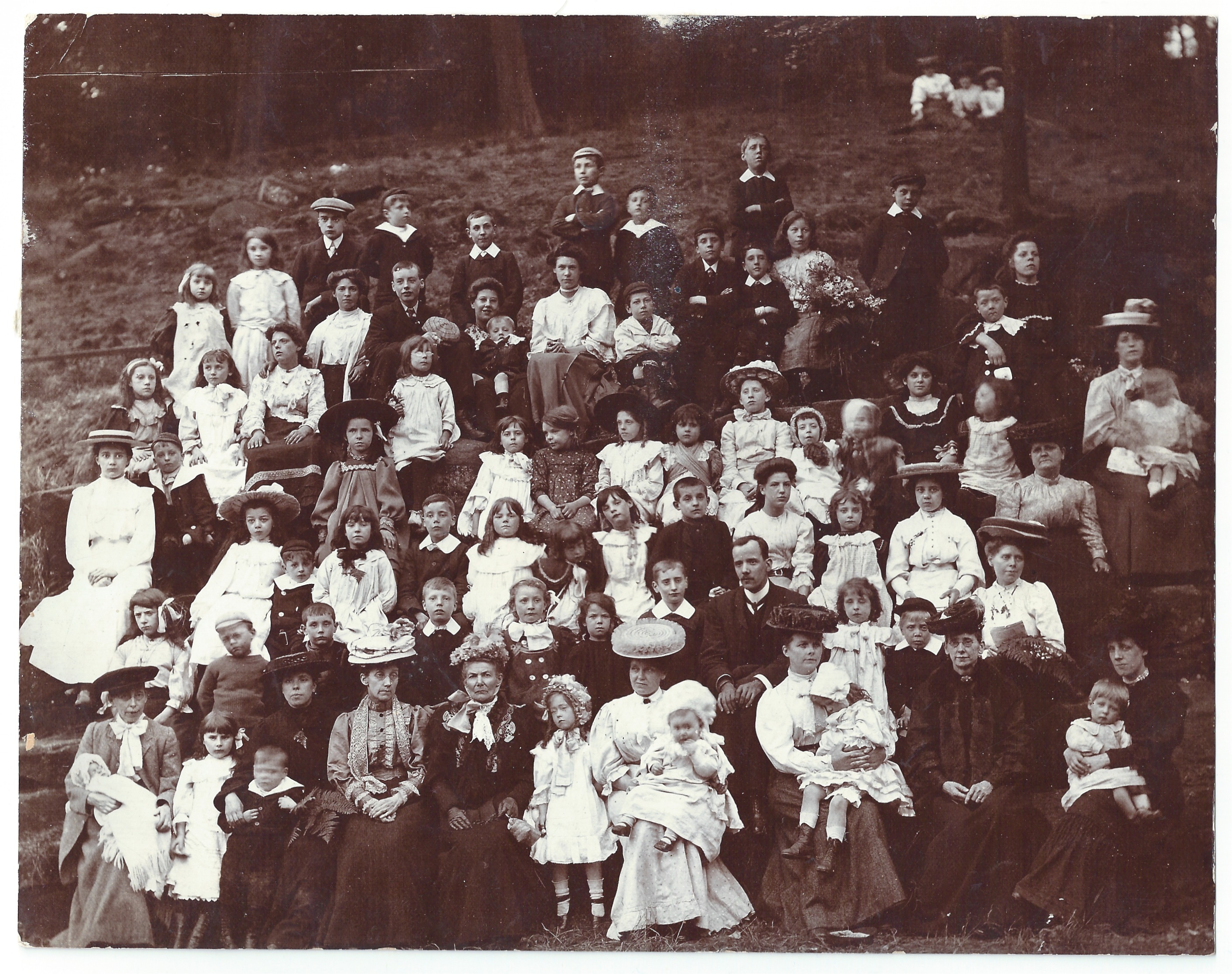

Delving into a document
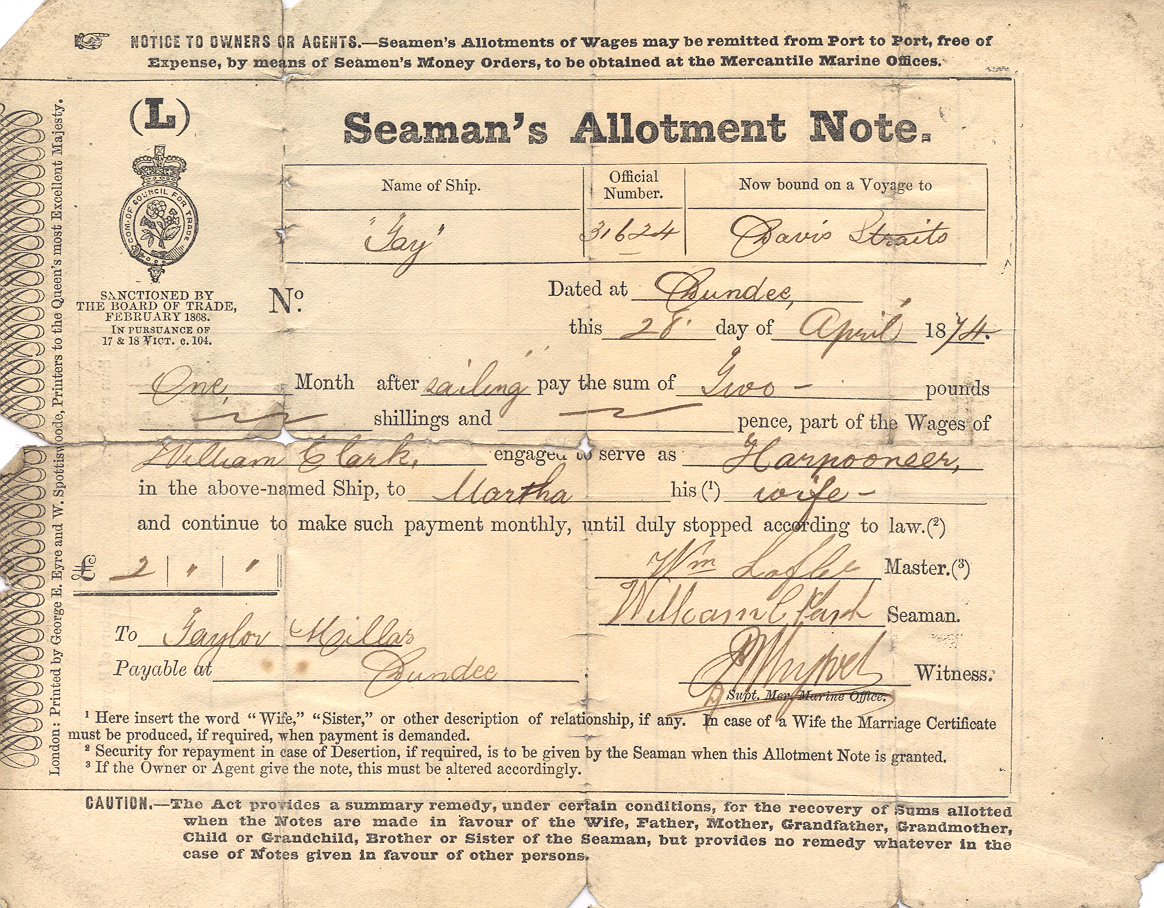
This is a Seaman’s Allotment Note issued at Dundee on 28 April 1874. My 2 x great grandfather William Taylor CLARK (1819-1902) was in his mid fifties, but still working as a harpooner, travelling to the Davis Straits off the west coast of Greenland in pursuit of whales.
The Allotment note allows his wife Martha to collect £2 each month (£1,500 in present day relative income terms).
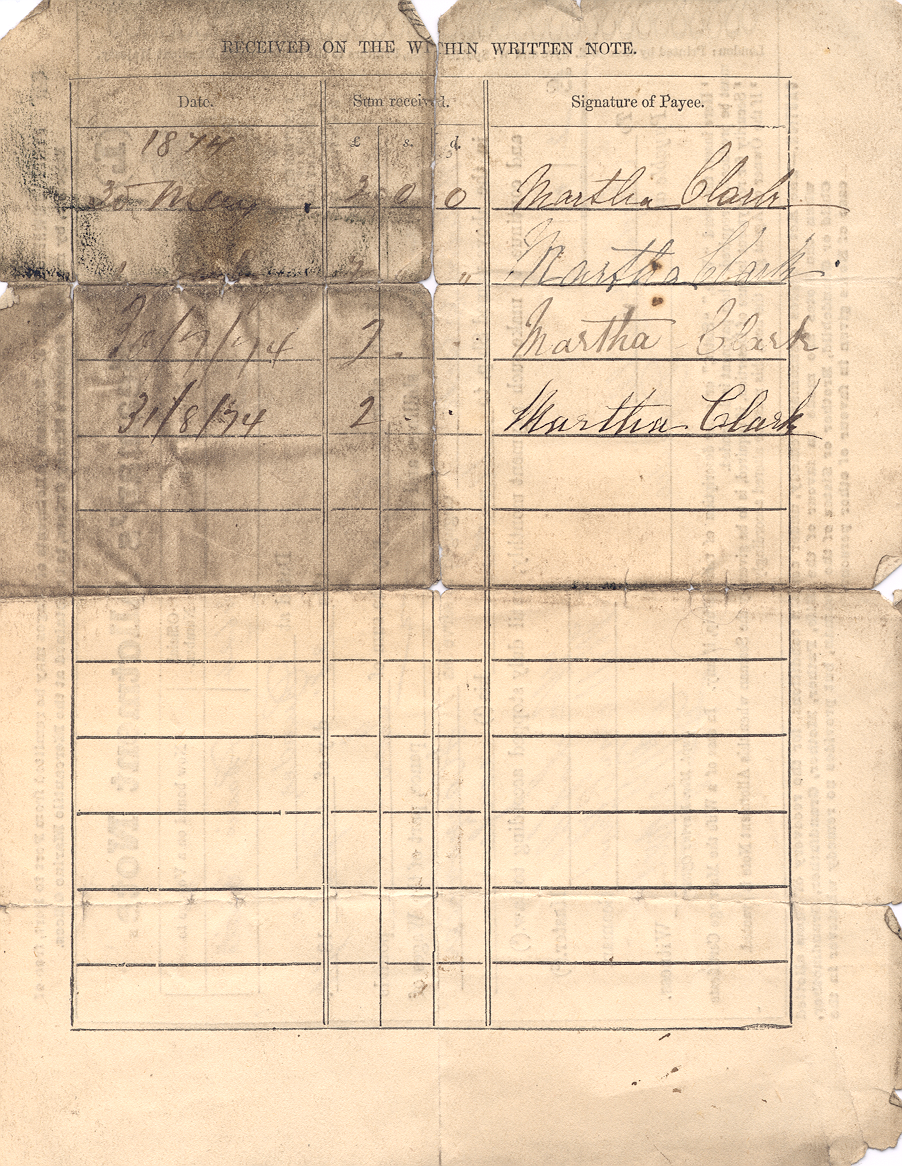
The money was to be collected at Taylor & Millars, which, a contemporary Trade Directory, tells me, was a firm of Sea Insurance Agents based at 18 Dock Street, Dundee. The reverse (pictured on the right) shows that she collected this advance on William’s wages at the end of May, June, July and August.
One other piece of information on the front of the Allotment Note is the ship’s name: Tay, and its Master: William Lofley.
William LOFLEY (c.1839-1895)
This William is also on my family tree. He was married to one of William Taylor CLARK’s nieces, making him William’s ‘nephew-in-law’. William LOFLEY had gained his Master’s Certificate the previous year and went on to have an illustrious career in arctic exploration on the Eira, alongside explorer Benjamin Leigh-Smith.
If I’m allowed to count a ‘brother-in-law of third great uncle’ as an ancestor then I believe he’s the only ancestor I know of so far who has a place named after him: Mys Lofli (or Cape Lofley), which can still be found on a map to the north of Russia (73.1718551, 45.0000000).
Tay
The real story behind this Allotment Note, and the one I’d love to know much more about, came to my attention through a sentence in the Shipping and Mercantile Gazette, Morning Summary, for Wednesday 9 September 1874:
TAY, whaling steamer, Lofley, was nipped by the ice when in Melville Bay on June 11, filled with water, and sank in the course of 35 minutes; the crew took to the ice, and were afterwards picked up by the German whaler Nova Zembla.
It was not unusual for whalers to be lost, and being caught between two or more large sheets of drifting ice, crushing the ship was one of the greatest perils. In such situations the men’s survival depended critically upon the proximity of other whalers, and the crew’s ability to get off the ship and to signal their distress. After an extensive search the most detailed account I can find originates from a few days earlier and tells us just a little more:
The Loss of the TAY: Our Lerwick correspondent telegraphs that the Tay was in Melville Bay on the 16th June on her way to the fishing ground, when she was caught by heavy ice and subjected to such a squeeze that her timbers gave way. She began to fill with water so rapidly that it at once became evident that no human power could save her, and the crew then proceeded to do what they could to save themselves. No other resource was left to them but to take to the ice; and it was exceedingly fortunate that the Nova Zembla, a German whaler, happened to be within a very short distance, and in the course of a short time the whole of the men were picked up. the ill-fated vessel sank in thirty-five minutes. Her crew was afterwards distributed among the Dundee vessels, Captain LOFLEY being put on board the Camperdown. The Tay was a vessel of 455 tons register, was built in 1850, and belonged to the Arctic Whale Fishing Company. We understand that she is insured.
One additional piece of information I’ve come across is in Duncan (2019) where it is said that the Shetland Museum and Archives has a swivel-mounted Greener harpoon gun with its brass inlay stamped TAY7 with a harpoon stamped ARCTIC1873. Perhaps my 2 x great grandfather once fired that gun. This museum is on my list to visit.
Two reflections
A simple document that hides so much history behind it. How many others hold similar histories? I can hold the Allotment Note in my hand today, but I can still only begin to guess at the rich flood of memories and emotions that holding that same small piece of paper would conjure up for both William and Martha.
Another aspect of this story is something that has really only become alien to many of us just in recent decades, is that something might happen to a loved one and we might not know about it for a considerable period of time – in this case almost 3 months. What was that not-knowing like?
Bibliography
- Credland, Arthur C. Benjamin Leigh Smith: A Forgotten Pioneer, Polar Record, Vol 20, No 125, 1980, p 127-145, p132
- Duncan, Adrian. 2019. Shetland and the Greenland Whaling. Shetland: The Shetland Times Limited. p426
- Dundee Courier and Argus, 5 Sep 1874, 2f
- Hull Eastern Morning News, 24 Jan 1881, 2f
- Shipping and Mercantile Gazette Morning Summary, 9 Sep 1874, 4d


 My Ancestors
Leave a reply to Joan Bos Cancel reply